Welcome to Bennett's Study

From the Author of No Land an Island and Unconscionable

Pondering Alphabetic SOLUTIONS: Peace, Politics, Public Affairs, People Relations

http://www.bennettponderingpeacepoliticssolutions.com/

http://www.bennettponderingpeacepoliticssolutions.com/author/

http://www.bennettponderingpeacepoliticssolutions.com/buy/

UNCONSCIONABLE: http://www.unconscionableusforeignrelations.com/ http://www.unconscionableusforeignrelations.com/author/ http://www.unconscionableusforeignrelations.com/book/ http://www.unconscionableusforeignrelations.com/excerpt/ http://www.unconscionableusforeignrelations.com/contact/ http://www.unconscionableusforeignrelations.com/buy/ SearchTerm=Carolyn+LaDelle+Bennett http://www2.xlibris.com/books/webimages/wd/113472/buy.htm http://www.prweb.com/releases/2014/08UNCONSCIONABLE/prweb12131656.htm http://bookstore.xlibris.com/AdvancedSearch/Default.aspx? http://bookstore.xlibris.com/Products/SKU-000757788/UNCONSCIONABLE.aspx

http://todaysinsight.blogspot.com

Showing posts with label Hassan Rouhani. Show all posts

Wednesday, September 25, 2013

IRI Pres. Rouhani calls for Peace-Endowing Coalitions instead of War Coalitions

STATUS QUO: prevalent international political discourse depicts “‘civilized’ center, ‘un-civilized’ peripheries”
Excerpt, minor edit by
Carolyn Bennett

Dr. Hassan Rouhani
President of the Islamic Republic of Iran, Dr. Hassan Rouhani in debate Tuesday at the Sixty-eighth Session of the United Nations General Assembly. This is some of what he said. 

“Our world today is replete with fear and hope


…fear of war and hostile regional and global relations;

…fear of deadly confrontation of religious, ethnic and national identities;

…fear of institutionalization of violence and extremism; fear of poverty and destructive discrimination;

…fear of decay and destruction of life-sustaining resources;

…fear of disregard for human dignity and rights; and

…fear of neglect of morality.

A
longside these fears … are new hopes: 

the hope of universal acceptance by the people and the elite all across the globe of ‘yes’ to peace, and ‘no’ to war; and 


 …the hope of preference of dialogue over conflict, moderation over extremism

Ever present though is the
Status quo

At this sensitive juncture in the history of global relations, the age of zero-sum games is over, even though a few actors still tend to rely on archaic and deeply ineffective ways and means to preserve their old superiority and domination. Militarism and the recourse to violent and military means to subjugate others are failed examples of the perpetuation of old ways in new circumstances.

Coercive economic and military policies and practices geared to the maintenance and preservation of old superiorities and dominations have been pursued in a conceptual mindset that negates peace, security, human dignity, and exalted human ideals.

Ignoring differences between societies and globalizing Western values as universal ones represent another manifestation of this conceptual mindset.

Yet another reflection of the same cognitive model is the persistence of Cold War mentality and bi-polar division of the world into ‘superior us’ and ‘inferior others.’

Fanning fear and phobia around the emergence of new actors on the world scene is another.

Peril

In such an environment, governmental and non-governmental, religious, ethnic, and even racial violence has increased, and there is no guarantee that the era of quiet among big powers will remain immune from such violent discourses, practices and actions.

T
he catastrophic impact of violent and extremist narratives should not - in fact, must not - be underestimated.

In this context, the strategic violence … manifested in the efforts to deprive regional players from their natural domain of action, containment policies, regime change from outside, and the efforts towards redrawing of political borders and frontiers, is extremely dangerous and provocative.

Dangerously disparaging (demonizing)

The prevalent international political discourse depicts a civilized center surrounded by un-civilized peripheries.

In this picture, the relation between the center of world power and the peripheries is hegemonic. The discourse assigning the North the center stage and relegating the South to the periphery has led to the establishment of a monologue at the level of international relations.

T
he creation of illusory identity distinctions and the current prevalent violent forms of xenophobia are the inevitable outcome of such a discourse. Propagandistic and unfounded faith-phobic, Islamo-phobic, Shia-phobic, and Iran-phobic discourses do indeed represent serious threats against world peace and human security.

This propagandistic discourse has assumed dangerous proportions through portrayal and inculcation of presumed imaginary threats. One such imaginary threat is the so-called ‘Iranian Threat’, which has been employed as an excuse to justify a long catalogue of crimes and catastrophic practices over the past three decades.… [But on the basis of] irrefutable evidence, those who harp on the so-called threat of Iran are either a threat against international peace and security themselves or promote such a threat. Iran poses absolutely no threat to the world or the region.

Iraq post-U.S.-led war
Violence of expansionism

Nowhere in the world has violence been so deadly and destructive as in North Africa and West Asia. Examples of violence in this region in the last three decades are:

Military intervention in Afghanistan

Saddam Hussein’s imposed war against Iran

Occupation of Kuwait

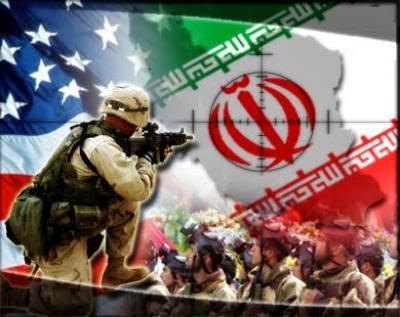
U.S. against Iran
Military interventions against Iraq

Brutal repression of the Palestinian people

Assassination of common people and political figures in Iran

Terrorist bombings in countries such as Iraq, Afghanistan and Lebanon

W
hat has been - and continues to be - practiced against the innocent people of Palestine is nothing less than structural violence. Palestine is under occupation; the basic rights of the Palestinians are tragically violated, and they are deprived of the right of return and access to their homes, birthplace and homeland. Apartheid as a concept can hardly describe the crimes and the institutionalized aggression against the innocent Palestinian people.

T
he human tragedy in Syria represents a painful example of catastrophic spread of violence and extremism in our region.

From the very outset of the crisis and when some regional and international actors helped to militarize the situation through infusion of arms and intelligence into the country and active support of extremist groups, we emphasized that there was no military solution to the Syrian crisis. Pursuit of expansionist strategies and objectives and attempts to change the regional balance through proxies cannot be camouflaged behind humanitarian rhetoric.

The common objective of the international community should be a quick end to the killing of the innocent. ...

Terrorism and the killing of innocent people represent the ultimate inhumanity of extremism and violence. Terrorism is a violent scourge and knows no country or national borders.

But the violence and extreme actions such as the use of drones against innocent people in the name of combating terrorism should also be condemned. (Here, I should also say a word about the criminal assassination of Iranian nuclear scientists. For what crimes were they assassinated?)

T
he United Nations and the UN Security Council should answer the question: have the perpetrators been condemned? 

Iran
Iran
Crimes against the peace: Sanctions warfare 

Unjust sanctions, as manifestations of structural violence, are intrinsically inhumane and against peace. And contrary to the claims of those who pursue and impose them ─ it is not the states and the political elite that are targeted; but rather the common people who are victimized by these sanctions.

Let us not forget millions of Iraqis who, as a result of sanctions covered in international legal jargon, suffered and lost their lives. Many more Iraqis continue to suffer all through their lives.

Sanctions Iraq
These sanctions are violent, pure and simple ─ whether called smart or otherwise, unilateral or multilateral.

These sanctions violate inalienable human rights, inter alia, the right to peace, right to development, right to access health and education; and above all, the right to life.

Sanctions, beyond any and all rhetoric, cause belligerence, warmongering and human suffering.

Sanctions’ negative impact is not merely limited to the intended victims of sanctions; it also affects the economy and livelihood of other countries and societies, including the countries imposing sanctions.

End status quo
End violence
Another world is possible

People all over the world are tired of war, violence and extremism. They hope for a change in the status quo. And this is a unique opportunity - for us all.

The Islamic Republic of Iran believes that all challenges can be managed - successfully - through a smart, judicious blend of hope and moderation.

Warmongers are bent on extinguishing all hope. But hope for change for the better is an innate, religious, widespread, and universal concept.…

Iran seeks constructive engagement with other countries based on mutual respect and common interest; and within the same framework, Iran does not seek to increase tensions with the United States.… Commensurate with the political will of the leadership in the United States and hoping that they will refrain from following the short-sighted interest of warmongering pressure groups, we can arrive at a framework to manage our differences. 

T
o this end, equal footing, mutual respect, and the recognized principles of international law should govern the interactions.… 

Join WAVE: World Against Violence and Extremism
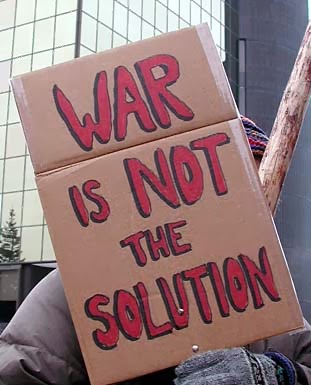
 
In recent years, a dominant voice has been repeatedly heard: ‘The military option is on the table.’ Against the backdrop of this illegal and ineffective contention … ‘peace is within reach.’

…In the name of the Islamic Republic of Iran, I propose, as a starting step, the consideration by the United Nations of the project ‘World Against Violence and Extremism’ (WAVE). I invite all states, international organizations and civil institutions to undertake a new effort to guide the world in this direction. Let us all join this ‘WAVE’.

We should start thinking about ‘Coalition for Enduing Peace’ all across the globe instead of the ineffective ‘Coalitions for War’ in various parts of the world.
  
  
Sources and notes

Islamic Republic of IRAN Permanent Mission to the United Nations Statement by H. E. Dr. Hassan Rouhani, President of the Islamic Republic of Iran at the Sixty-eighth Session of the United Nations General Assembly (New York, 24 September 2013) 622 - See more at: http://gadebate.un.org/68/iran-islamic-republic#sthash.Mbd0TCJr.dpuf
622 Third Ave, New York, NY 10017 Tel: (212) 687-2020 Fax: (212) 867-7086 email: iran@un.int
http://gadebate.un.org/sites/default/files/gastatements/68/IR_en.pdf
 http://gadebate.un.org/

“Iran’s new President proposes immediate ‘time-bound’ talks on nuclear issues,” UN News Centre, September 24, 2013 http://www.un.org/apps/news/story.asp?NewsID=45984&Cr=general+debate&Cr1=#.UkM7qmzD-1s


24 September 2013 – From the podium of the United Nations General Assembly, Iran’s new President, Hassan Rouhani, today foreswore the production of nuclear weapons, reasserted his country’s right to peaceful nuclear enrichment and proposed immediate ‘time-bound’ talks to resolve the issue.

‘I declare here, openly and unambiguously, that, notwithstanding the positions of others, this has been, and will always be, the objective of the Islamic Republic of Iran,” he told the General Assembly on the first day of its General Debate, speaking hours after United States President Barack Obama told the same gathering that he was directing U.S. Secretary of State John Kerry to pursue a diplomatic course with Iran on the matter.

Hassan Rouhani

Academic, cleric, lawyer, politician and former diplomat, Hassan Rouhani (b. November 12, 1948) is a member of the Assembly of Experts and the Expediency Council and the Supreme National Security Council, head of the Center for Strategic Research, and the 7th and current President of the Islamic Republic of Iran.

Before his election to the presidency Rouhani was also deputy speaker of the 4th and 5th terms of the Islamic Consultative Assembly (Majlis - Iranian Parliament) and secretary of the Supreme National Security Council (1989-2005). In the later capacity, he headed Iran's former nuclear negotiating team and was the country’s top negotiator ─ with the European Union three: the United Kingdom, France, and Germany – on Iran’s nuclear program.

Fluent in Persian, English and Arabic, Rouhani took his academic credentials at the University of Tehran, Iran (B.A. in Judicial Law, 1972) and Glasgow Caledonian University in Scotland (M.Phil. in Law, 1995 and Ph.D. in Constitutional Law, 1999). He holds the rank of research professor at Iran’s Center for Strategic Research and is a prolific writer.

Hassan Rouhani was announced the winner of Iran’s Presidency a day after the election and received his presidential precept from his predecessor, Mahmoud Ahmadinejad, on August 3, 2013, and entered Sa’dabad Palace in a private ceremony. Rouhani’s work as president officially began on the same day. He was inaugurated as the seventh president of Iran in the Parliament on August 4, 2013.

President Hassan Rouhani bio http://en.wikipedia.org/wiki/Hassan_Rouhani


_______________________________________________________

Bennett's books are available in New York State independent bookstores: Lift Bridge Bookshop: www.liftbridgebooks.com [Brockport, NY]; Sundance Books: http://www.sundancebooks.com/main.html [Geneseo, NY]; Mood Makers Books: www.moodmakersbooks.com [City of Rochester, NY]; Dog Ears Bookstore and Literary Arts Center: www.enlightenthedog.org/ [Buffalo, NY]; Burlingham Books – ‘Your Local Chapter’: http://burlinghambooks.com/ [Perry, NY 14530]; The Bookworm: http://www.eabookworm.com/ [East Aurora, NY] • See also: World Pulse: Global Issues through the eyes of Women: http://www.worldpulse.com/ http://www.worldpulse.com/pulsewire http://www.facebook.com/#!/bennetts2ndstudy
_______________________________________________________

Friday, September 20, 2013

”See beyond pines … think, talk about how to make things better“ ─ President Hassan Rouhani

Iranian voices as UN General Assembly enters Sixty-eighth Debate Session
Editing by Carolyn Bennett

The United Nations General Assembly is the main deliberative, policy making and representative organ of the United Nations. Comprising all 193 Members of the United Nations, it provides a unique forum for multilateral discussion of the full spectrum of international issues covered by the Charter of the United Nations. 

The 68th Session of the United Nations General Assembly’s annual general debate – when Heads of State and Government and other high national officials gather to present their views about pressing world issues – opens Tuesday September 24 and run through Tuesday October 1, 2013

We consider war a weakness.  Any government or administration that decides to wage a war, we consider it a weakness.  And any government that decides on peace, we look on it with respect to peace [Hassan Rouhani].

Progressive Islam faces colonial secularism ─ Dr. Amir Dabiri Mehr

“…Since the collapse of the Ottoman Empire and the reorganization of the Middle East in the years following World War I, the West has failed to present a better model than subordinate dictatorship for these countries.


“The U.S. involvement in toppling Iraq’s former dictator Saddam Hussein was not aimed at removing the shadow of a vampire dictator over the Iraqi nation. Instead, Washington had come to the conclusion that Saddam was no longer a trustworthy element for enforcing Washington’s policies across the region and he was deciding arbitrarily as he did with his invasion of Kuwait.

“
…The protest movement that started as the Islamic Awakening or Arab Spring in Tunisia and then spread to Egypt, Libya and Bahrain was not a premeditated Western scenario.

“It was a spontaneous reality born of pent-up popular demands similar to other social movements and phenomena that require time and opportunity to emerge.

“…All these uprisings and awakening movements share four attributes: 1) emphasis on religious identity 2) freedom-seeking 3) democracy-seeking 4) independence-seeking.”

American rationally sidelined in dealings with Iran ─ Dr. Amir Dabiri Mehr

A list of “6 opportunities lost by the United States as a result of its hostility with Iran…show “that American politicians have never dealt with Iran based on the American rationality and the national interests of the United States over the past years.” 
  • U.S. is presented to the Iranian people as ruthless and aggressive, especially with the implementation of inhumane sanctions in the recent years 
  • U.S. private sector is deprived of investing in Iran, particularly in the areas of oil and gas 

Women of Iran
under
Western Sanctions 
  • Anti-arrogance and anti-American sentiments have spread in the Middle East and the Muslim world, which was inspired by Iran’s Islamic Revolution and the Islamic Republic’s anti-oppression policies 
  • U.S. in the Mideast is increasingly discredited in its rivalry with the Islamic Republic, particularly in Iraq, Afghanistan and Syria 
  • U.S. is increasingly deprived of the chance to directly interact with and contact Tehran over key regional issues 
  • U.S.’s allying with some reactionary governments with the objective of filling the vacuum of Iran has further downgraded the United States’ credibility as a country claiming to advocate democracy; and begs the question of why the U.S. has friendly ties with tyrannical and reactionary states, yet is hostile to a democratic state like Iran.

“…It is fair to say,” Dr. Amir Dabiri Mehr concludes, that “by continuing the hostility with Iran, the Americans have had no tangible achievement in the field of their national interests and have only been able to appease Tel Aviv while receiving backlash.” Altering the U.S. approach toward Iran “will open a new chapter of national-interest diplomacy.”

H
arry J. Bentham writes along the same lines of dominance and forced subservience. “Beyond Iranian-U.S. relations, the top political tension in the modern world … arises over the issue of countries crossing the barrier by refusing to be servants and becoming leaders in the international order. It is a valid historical observation that the countries which consider themselves as top powers often assume the role of oppressors, denying the rights of emerging powers and seeking to marginalize them.”

Round and round we go 
Circularity, West blocks own “values”
Political futurist writer Harry J. Bentham headlines Equality requires Iran access to nuclear technology

“…Despite modern liberalism’s commitments to liberty and equality, there is an insurmountable paradox in treating non-Western states as second-class participants in international relations” ─ a state of affairs, an attitude that is "…further emphasized by the lack of value placed in the lives of non-Western people by Western governments.
 
In the minds of Western politicians, a million dead children in Iraq or elsewhere in the Middle East is barely a scratch on their moral reputations, and yet they insultingly go about mourning similar deaths that occurred decades ago in European wars and genocides.
  
Empire: Britain
“…In reality, Western countries desperately seek to privilege themselves and repeatedly abuse their senior economic positions to ‘kick away the ladder’, offering false guidance to marginalized states. In most cases, countries have actually gained most of their progress by disregarding Western advice and following their own independent paths rather than allowing Western countries to dictate development. Japan in the early Twentieth Century, for example, was the most rapid success in achieving development to a fully modernized level in a non-Western state, and this resulted because Japan looked at the West’s scientific and engineering methods and did not follow foreign economic dictates.”
Western Brute 

“
Empire: France
Unable to see how their ideology is contradictory, Western states have historically used blockades, sanctions and other punishments on countries they disapprove of. However, the political outcome from such actions is always destructive. Far from pressuring governments to change their views, sanctions lead to a negative political culture by adding to a sense of crisis. As a result, much of the rationale for Western sanctions against Iran amounts to a circular argument.

Empire: United States
“… If liberal states and citizens hostile to Iran could entertain the possibility that they are not acting in accord with their own liberal principles and are allowing prejudices to drive them, they would see how to end confrontations with Iran.

“Lifting the sanctions on Iran would allow the political culture in Iran to flourish and liberalize like never before, bringing an appreciation of the West in Iran. This would finally allow the West to live up to its own stated belief in equality. The alternative is for Iran to continue to hold legitimate suspicions towards Western powers, and Western political systems will fester in deepening confusion and hypocrisy.”

President of Iran
Hassan Rouhani 
Iran’s new president en route to 68th UN General Assembly: 
“Constructive interaction”

Elected and inaugurated in early August, the Islamic Republic of Iran’s new president is an academic, cleric, lawyer, politician and former diplomat. He holds baccalaureate and advanced degrees in law, is fluent in Arabic, English and Persian, is a prolific writer, and holds the rank of research professor at Iran’s Center for Strategic Research.

This is some of what President Hassan Rouhani had to say this week en route to the United Nations. “We and our international counterparts have spent a lot of time - perhaps too much time - discussing what we don’t want rather than what we do want. This is not unique to Iran’s international relations. In a climate where much of foreign policy is a direct function of domestic politics, focusing on what one doesn’t want is an easy way out of difficult conundrums for many world leaders. Expressing what one does want requires more courage.

“After 10 years of back-and-forth, what all sides don’t want in relation to our nuclear file is clear. The same dynamic is evident in the rival approaches to Syria.

“This approach can be useful for efforts to prevent cold conflicts from turning hot. But to move beyond impasses, whether in relation to Syria, my country’s nuclear program or its relations with the United States, we need to aim higher.

“
Rather than focusing on how to prevent things from getting worse, we need to think - and talk - about how to make things better. To do that, we all need to muster the courage to start conveying what we want - clearly, concisely and sincerely - and to back it up with the political will to take necessary action. This is the essence of my approach to constructive interaction.

“As I depart for New York for the opening of the UN General Assembly, I urge my counterparts to seize the opportunity presented by Iran’s recent election.

“
I urge them to make the most of the mandate for prudent engagement that my people have given me and to respond genuinely to my government’s efforts to engage in constructive dialogue.

“Most of all, I urge them to look beyond the pines and be brave enough to tell me what they see - if not for their national interests, then for the sake of their legacies, and our children and future generations.”


Sources and notes

68th UN General Assembly, http://www.un.org/en/ga/
http://gadebate.un.org/

“Iran President Rouhani: ‘We Will Never Develop Nuclear Weapons’”
(By Tracy Connor, Staff Writer, NBC News), September 19, 2013,
http://sreaves32.wordpress.com/2013/09/19/exclusive-interview-with-iranian-president-hassan-rouhani/

“Progressive Islam faces colonial secularism in Egypt”: Analyst (Dr. Amir Dabiri Mehr),
July 11, 2013, http://sachtimes.com/?a=content.id&id=9057&lang=en

Dr. Amir Dabiri Mehr is an Iranian political commentator with more than a decade experience in mass communication and politics. He holds a Ph.D. in political science. 

“American rationally sidelined in dealings with Iran” (Dr. Amir Dabiri Mehr), September 20, 2013, http://www.presstv.ir/detail/2013/09/20/325082/us-rationally-sidelined-in-iran-dealings/

“Equality requires Iran access to nuclear technology” (Harry J. Bentham)
September 20, 2013, http://www.presstv.ir/detail/2013/09/20/325024/equality-requires-iran-n-energy-access/

Harry J. Bentham is a British “political futurist writer” currently on the advisory board of the Lifeboat Foundation think tank. His work, placing emphasis on global economic disparities and the benefits of technology-driven social change, can be found at a number of online publications, including the radical newsletter Dissident Voice and the transhumanist publication h+ Magazine.

“Why Iran seeks constructive engagement,” September 20, 2013 (Originally published on Washington Post website then Press TV, http://www.presstv.ir/detail/2013/09/20/325033/why-iran-seeks-constructive-engagement/

Hassan Rouhani

Academic, cleric, lawyer, politician and former diplomat, Hassan Rouhani (b. November 12, 1948) is a member of the Assembly of Experts and the Expediency Council and the Supreme National Security Council, head of the Center for Strategic Research, and the 7th and current President of the Islamic Republic of Iran.

Before his election to the presidency Rouhani was also deputy speaker of the 4th and 5th terms of the Islamic Consultative Assembly (Majlis - Iranian Parliament) and secretary of the Supreme National Security Council (1989-2005). In the later capacity, he headed Iran's former nuclear negotiating team and was the country’s top negotiator ─ with the European Union three: the United Kingdom, France, and Germany – on Iran’s nuclear program.

Fluent in Persian, English and Arabic, Rouhani took his academic credentials at the University of Tehran, Iran (B.A. in Judicial Law, 1972) and Glasgow Caledonian University in Scotland (M.Phil. in Law, 1995 and Ph.D. in Constitutional Law, 1999). He holds the rank of research professor at Iran’s Center for Strategic Research and is a prolific writer.

Hassan Rouhani was announced the winner of Iran’s Presidency a day after the election and received his presidential precept from his predecessor, Mahmoud Ahmadinejad, on August 3, 2013, and entered Sa’dabad Palace in a private ceremony. Rouhani’s work as president officially began on the same day. He was inaugurated as the seventh president of Iran in the Parliament on August 4, 2013.

President Hassan Rouhani bio http://en.wikipedia.org/wiki/Hassan_Rouhani
__________________________________________

Bennett's books are available in New York State independent bookstores: Lift Bridge Bookshop: www.liftbridgebooks.com [Brockport, NY]; Sundance Books: http://www.sundancebooks.com/main.html [Geneseo, NY]; Mood Makers Books: www.moodmakersbooks.com [City of Rochester, NY]; Dog Ears Bookstore and Literary Arts Center: www.enlightenthedog.org/ [Buffalo, NY]; Burlingham Books – ‘Your Local Chapter’: http://burlinghambooks.com/ [Perry, NY 14530]; The Bookworm: http://www.eabookworm.com/ [East Aurora, NY] • See also: World Pulse: Global Issues through the eyes of Women: http://www.worldpulse.com/ http://www.worldpulse.com/pulsewire http://www.facebook.com/#!/bennetts2ndstudy

__________________________________________