Welcome to Bennett's Study

From the Author of No Land an Island and Unconscionable

Pondering Alphabetic SOLUTIONS: Peace, Politics, Public Affairs, People Relations

http://www.bennettponderingpeacepoliticssolutions.com/

http://www.bennettponderingpeacepoliticssolutions.com/author/

http://www.bennettponderingpeacepoliticssolutions.com/buy/

UNCONSCIONABLE: http://www.unconscionableusforeignrelations.com/ http://www.unconscionableusforeignrelations.com/author/ http://www.unconscionableusforeignrelations.com/book/ http://www.unconscionableusforeignrelations.com/excerpt/ http://www.unconscionableusforeignrelations.com/contact/ http://www.unconscionableusforeignrelations.com/buy/ SearchTerm=Carolyn+LaDelle+Bennett http://www2.xlibris.com/books/webimages/wd/113472/buy.htm http://www.prweb.com/releases/2014/08UNCONSCIONABLE/prweb12131656.htm http://bookstore.xlibris.com/AdvancedSearch/Default.aspx? http://bookstore.xlibris.com/Products/SKU-000757788/UNCONSCIONABLE.aspx

http://todaysinsight.blogspot.com

Showing posts with label international affairs. Show all posts

Monday, February 24, 2014

Crimes against Humanity: Whose lives count, whose do not?

Against Humanity
International affairs expert ponders most-told history
An article worth reading in full
Excerpt, editing, brief comment by
Carolyn Bennett

Drones on Pakistanis
Why have the Western media and academia placed such importance and focus on Jewish deaths in World War II? Are Jewish deaths more tragic than non-Jewish deaths? Does Jewish suffering trump that of non-Jewish peoples? Are Jewish lives worth more than non-Jews’ lives? Canada-based international affairs specialist Brandon Martinez ponders these questions in an article published today at Press TV. “Whether they realize it or not,” Martinez says, “commentators who advance the primacy of Jewish suffering are enabling the Zionists’ continued genocidal subjugation of the Palestinians.”

Whose numbers?

Decades of intense Zionist propaganda on the subject of “The Holocaust” blinds most people, including media personalities, and prevents them from “overcom[ing] their brainwashing; or they are just too proud to admit they were wrong. …For 45 years, the standard histories told us [that] four million people died at Auschwitz. When the communist iron curtain disintegrated in 1990, the figure was revised downwards to 1.5 million; but the real death total remains a mystery. 

“Some historians estimate less than 100,000 people died in that [Auschwitz] camp, primarily from disease and starvation caused by Allied bombing.  Official sources have likewise reduced significantly the death totals at other major German camps.
“The Majdanek and Mauthausen camps were at one time claimed to be the resting places of 3.5 million Jews and others. Establishment sources now contend that around 74,000 Jews died in those two facilities combined.”


Soviet

Palestinians
“Genocidal policies of the Soviet Bolsheviks, a large portion of whom were Jewish, led to the deaths of at least 40 million people, a number far exceeding even the greatest myths about the Jewish holocaust.

Pakistan
Palestinian woman and child
“In 1932 alone, the Soviet secret police (the Cheka) orchestrated the demise of more than seven million Ukrainians in what is now known as the Holodomor, an artificial famine-genocide sponsored by Moscow.  In 2009, the Jewish Telegraphic Agency reported that Ukraine’s security service ‘is pressing the case against a list of former Soviet officials accused of committing the Holodomor, which caused the deaths of millions in Ukraine in 1932-33 … (most names on the list Jewish).’”
American

This “country founded upon ethnic cleansing and genocide,” Martinez recalls, “committed egregious war crimes against Germany and Japan during the Second World War, starving to death more than 1.5 million German POWs in concentration camps after the end of the war, and dropping two atomic bombs on Hiroshima and Nagasaki.” This added to “the Allied carpet-bombing of German cities during the war, killing hundreds of thousands of German civilians in a matter of hours.

Syria
“The Allied Powers fully aided and abetted Stalin’s crimes against humanity and took part in post-war massive ethnic cleansing of Germans from territory stripped from Germany and given to surrounding countries. …” Between 1944 and 1950, more than nine million Germans died because of “deliberate Allied-Soviet expulsion and starvation tactics.”  Invading Soviet Red Army troops “mass raped and tortured…more than two million German women” [Ref. historian James Baque].
 Labor or homicide camps

“In reality,” Martinez writes, “Auschwitz was a labour camp. “Arbeit macht frei (Work makes you free),” read the sign over the gated entrance to the camp. Inmates worked in the nearby factories to produce armaments, synthetic rubber and other materials for the German war effort.

Guantanamo
“It makes no practical sense [that] the German government would waste so much time and resources [killing] off their labour force, especially when they were fighting a war on two fronts against formidable enemies.” Acknowledging that the labor camps were reprehensible, Martinez continues, “but when put into context, the practice was not particularly unusual. The Soviets established a vast network of forced labour camps (known as the Gulag) long before the Germans set up their labour facilities during the war; yet there is far less criticism or condemnation of the Soviets, even though their camps were far more inhumane than those of their German counterparts.”

Refugees
Syria
 Gulag Russian ‘Chief Administration of Corrective Labour Camps’), system of Soviet labour camps and accompanying detention and transit camps and prisons that, from the 1920s to the mid-1950s, housed the political prisoners and criminals of the Soviet Union. Inmates filled the Gulag in three major waves: 1929–32, the years of the collectivization of Soviet agriculture; 1936–38, at the height of Stalin’s purges; and in the years immediately following World War II. Solzhenitsyn reported ‘some forty to fifty million people served long sentences in the Archipelago between 1928 and 1953.’ The Gulag administration’s supposedly compiled figures (released by Soviet historians in 1989) showed they has sent 10 million people to the camps in the years 1934 to 1947. The true figures remain unknown [Britannica Deluxe Edition 2013]

Martinez continues citing studies

Leuchter Report challenge 

“The gassing stories form the foundational myths of the holocaust,” he writes, but… “Experts contend that gassing is the most inefficient and dangerous method for executions.” Researcher Ernst Zundel in 1988 “commissioned an expert to examine the rooms in Auschwitz and Majdanek which were claimed to have functioned as gas chambers for killing mass amounts of people.

“Fred Leuchter, a specialist who designed execution equipment including gas chambers for American prisons, did a forensic examination of these facilities. Going into the endeavor, Leuchter fully believed the official story about gassings but was quickly amazed at how implausible it would have been for these rooms to function as mass execution gas chambers.…

"Leuchter took brick samples of the walls of the alleged gas chambers and sent them to a chemical laboratory in Massachusetts. The test results revealed the brick samples contained negligible traces of cyanide residue, these results contrasted with other samples taken from walls of delousing chambers (rooms where Zyklon B was sprayed on clothing and mattresses to kill lice), and found these samples contained high traces of cyanide residue.” Leuchter writes in his 1988 Leuchter Report, Martinez quotes:

‘It is the best engineering opinion of this author that the alleged gas chambers at the inspected sites could not have [been] utilized or seriously considered to function as execution gas chambers.’

Afghanistan
Rudolf Report challenge

“Another problem with the gassing story,” Martinez references chemist Germar Rudolf in a 1993 Rudolf Report, “is the issue of blue staining caused by Zyklon B. ‘[T]he walls within the buildings in which Zyklon B is proved to have been used to delouse inmate clothing exhibit massive, blotchy, bluish discoloration… Massive blue staining is visibly present in rooms used for delousing, but no such stains are visible in any of the rooms claimed to have been ‘homicidal gas chambers. For chemical-physical reasons, the claimed mass gassings with hydrocyanic acid in the alleged gas chambers in Auschwitz did not take place.…. …The supposed gas chambers in Auschwitz and Birkenau did not come into contact with Zyklon B. In legal language: the weapon was not loaded.’”

Britannica Deluxe Edition 2013: Beginning in June 1941 with the German invasion of the Soviet Union, Jews in the newly conquered areas were rounded up and taken to nearby execution sites, such as Baby Yar, in Ukraine, and killed. Initially, mobile killing units were used. This process was disquieting to local populations and also difficult for the units to sustain. The idea of the extermination camp was to reverse the process and have mobile victims—transported by rail to the camps—and stationary killing centres where large numbers of victims could be murdered by a greatly reduced number of personnel: e.g., the staff of Treblinka was 120, with only 20–30 personnel belonging to the SS, the Nazi paramilitary corps. The staff of Belzec was 104, with about 20 SS personnel. Killing at each of the centres was by poison gas. Chelmno, the first of the extermination camps, where gassing began on December 8, 1941, employed gas vans whose carbon-monoxide exhaust asphyxiated passengers. Auschwitz, the largest and most lethal of the camps, used Zyklon-B.

Majdanek and Auschwitz were also slave-labour centres, while Treblinka, Belzec, and Sobibor were devoted solely to killing.
The Nazis murdered between 1.1 million and 1.5 million people at Auschwitz, 750,000–900,000 at Treblinka, and at least 600,000 at Belzec during its 10 months of operation. The overwhelming majority of the victims were Jews. Treblinka, Sobibor, and Belzec were closed in 1943, their task completed as the ghettos of Poland were emptied and their Jews killed. Auschwitz continued to receive victims from throughout Europe until Soviet troops approached in 1945.

U.S. foreign policy: FDR –

Martinez resumes

“The pressure of the Jews on [U.S.] President [Franklin Delano] Roosevelt (1933-1945) and on the State Department is becoming ever more powerful,” Martinez references then-Polish Ambassador in Washington Count Jerzy Potocki’s pre-war warnings that the American public was being subjected to increasingly alarming propaganda that was ‘feverishly inciting war with Germany….’ He continues Potocki’s comments:

‘The Jews are right now the leaders in creating a war psychosis which would plunge the entire world into war. … This international Jewry exploits every means of propaganda to oppose any tendency towards any kind of consolidation and understanding between nations.

‘…I have repeatedly come up against the inexorable and convinced view that war is inevitable.

‘…Roosevelt has been given the foundation for activating American foreign policy, and simultaneously has been procuring enormous military stocks for the coming war….’

T
World War II
he “good guys” caused the deaths of  “40,000,000–50,000,000 in that war.” According to a Britannica article, World War II was the "bloodiest conflict, as well as the largest war, in history.” However, the full record of wars executed and deaths (crimes against humanity) caused by war powers in the years from World War II forward has not yet been written.  

Martinez concludes 


Fast forward to today. “The media’s obsession with the holocaust is part and parcel of the Zionist campaign to cast a spell over the collective consciousness of the Western world in order to desensitize the public to the suffering of the Palestinians and shield Israel from criticism. The Orwellian attempt to stifle unfettered debate about questionable aspects of the holocaust story and censor skeptics by enshrining laws that punish dissenting opinions only fortifies the revisionist position.

War on Iraq

I
'm in no position to critique Zionists or historians, but I do agree that the mind of Americans is being warped using a variety of pretexts and non-stop government and mass media propaganda. The tactic has been in force ever since and likely before World War II. It has fueled U.S. wars and animosities from Southeast Asia to Southwest Asia, the Near East, north into the Caucasus, Central and Eastern Europe, and right the way across Africa. In these wars, invasions, provocations, and occupations, crimes against human beings have been committed constantly and with impunity and the mass media have been essentially mum. If you don't think there is something seriously wrong with this, you are living on some terribly distant planet. .


Sources and notes

“Zionist exceptionalism, fears WW2 truth,” February 24, 2014, http://www.presstv.ir/detail/2014/02/24/352028/zionist-exceptionalism-fears-ww2-truth/


Brandon Martinez is a freelance writer and journalist from Canada. His areas of expertise are foreign policy, international affairs, and 20th and 21st century history. His writings focus on subjects such as Zionism, Israel-Palestine, American and Canadian foreign policy, war, terrorism, and deception in media and politics.

Britannica Deluxe Edition 2013 Articles notes

Majdanek (also spelled  Maidanek , also called  Lublin-Majdanek): Nazi German concentration and extermination camp on the southeastern outskirts of the city of Lublin, Poland. In October 1941, it received its first prisoners, mainly Soviet prisoners of war, virtually all of whom died of hunger and exposure. Within a year, however, it was converted into a death camp for Jews, transported first from Bohemia and Moravia (now in the Czech Republic) and then from Poland, The Netherlands, and Greece. Like Auschwitz, Majdanek was not a death camp alone but also a prison camp and a work camp. With seven gas chambers, two wooden gallows, and some 227 structures in all, it was among the largest camps. In September 1943, the Nazis added a large crematorium containing five ovens.


Mauthausen: one of the most notorious Nazi concentration camps, located near the village of Mauthausen, on the Danube River, 12 miles (20 km) east of Linz, Austria. It was established in April 1938, shortly after Austria was annexed to Nazi Germany. Starting as a satellite of Dachau, in Germany, it became an independent camp in the spring of 1939, operated by the SS (the Nazi paramilitary corps) and acquiring satellite camps of its own throughout Austria, all collectively called Mauthausen. The camp provided slave labour to work previously abandoned stone quarries nearby. During its first year, the camp received prisoners transferred from Dachau—mainly convicted criminals, but also so-called ‘asocial elements,’ including political prisoners, homosexuals, and others. The camp later became a detention centre for anti-Nazis from all over Europe, including 10,000 Spanish Republicans. In November 1941, Soviet prisoners of war began arriving. The first Jews arrived in May 1941, but Jews were a small minority of the camp prisoners until 1944, when Jews from Poland (especially from Plaszow) and Hungary greatly increased the camp population. Still later, Mauthausen absorbed survivors of the infamous death marches from evacuated extermination camps.

The images I compiled to offer an enlightening post-World War II counterpoint or supplemental to Martinez's Holocaust Nazi era focus.

_________________________________________________________

Bennett's books are available in New York State independent bookstores: Lift Bridge Bookshop: www.liftbridgebooks.com [Brockport, NY]; Sundance Books: http://www.sundancebooks.com/main.html [Geneseo, NY]; Mood Makers Books: www.moodmakersbooks.com [City of Rochester, NY]; Dog Ears Bookstore and Literary Arts Center: www.enlightenthedog.org/ [Buffalo, NY]; Burlingham Books – ‘Your Local Chapter’: http://burlinghambooks.com/ [Perry, NY 14530]; The Bookworm: http://www.eabookworm.com/ [East Aurora, NY] • See also: World Pulse: Global Issues through the eyes of Women: http://www.worldpulse.com/ http://www.worldpulse.com/pulsewire http://www.facebook.com/#!/bennetts2ndstudy

_________________________________________________________

Friday, September 20, 2013

”See beyond pines … think, talk about how to make things better“ ─ President Hassan Rouhani

Iranian voices as UN General Assembly enters Sixty-eighth Debate Session
Editing by Carolyn Bennett

The United Nations General Assembly is the main deliberative, policy making and representative organ of the United Nations. Comprising all 193 Members of the United Nations, it provides a unique forum for multilateral discussion of the full spectrum of international issues covered by the Charter of the United Nations. 

The 68th Session of the United Nations General Assembly’s annual general debate – when Heads of State and Government and other high national officials gather to present their views about pressing world issues – opens Tuesday September 24 and run through Tuesday October 1, 2013

We consider war a weakness.  Any government or administration that decides to wage a war, we consider it a weakness.  And any government that decides on peace, we look on it with respect to peace [Hassan Rouhani].

Progressive Islam faces colonial secularism ─ Dr. Amir Dabiri Mehr

“…Since the collapse of the Ottoman Empire and the reorganization of the Middle East in the years following World War I, the West has failed to present a better model than subordinate dictatorship for these countries.


“The U.S. involvement in toppling Iraq’s former dictator Saddam Hussein was not aimed at removing the shadow of a vampire dictator over the Iraqi nation. Instead, Washington had come to the conclusion that Saddam was no longer a trustworthy element for enforcing Washington’s policies across the region and he was deciding arbitrarily as he did with his invasion of Kuwait.

…The protest movement that started as the Islamic Awakening or Arab Spring in Tunisia and then spread to Egypt, Libya and Bahrain was not a premeditated Western scenario.

“It was a spontaneous reality born of pent-up popular demands similar to other social movements and phenomena that require time and opportunity to emerge.

“…All these uprisings and awakening movements share four attributes: 1) emphasis on religious identity 2) freedom-seeking 3) democracy-seeking 4) independence-seeking.”

American rationally sidelined in dealings with Iran ─ Dr. Amir Dabiri Mehr

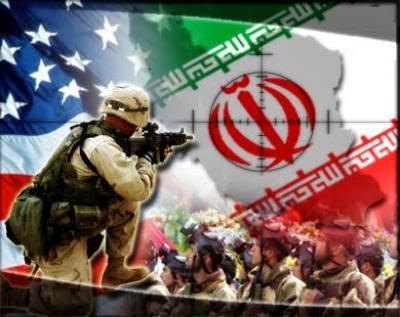
A list of “6 opportunities lost by the United States as a result of its hostility with Iran…show “that American politicians have never dealt with Iran based on the American rationality and the national interests of the United States over the past years.” 
  • U.S. is presented to the Iranian people as ruthless and aggressive, especially with the implementation of inhumane sanctions in the recent years 
  • U.S. private sector is deprived of investing in Iran, particularly in the areas of oil and gas 

Women of Iran
under
Western Sanctions 
  • Anti-arrogance and anti-American sentiments have spread in the Middle East and the Muslim world, which was inspired by Iran’s Islamic Revolution and the Islamic Republic’s anti-oppression policies 
  • U.S. in the Mideast is increasingly discredited in its rivalry with the Islamic Republic, particularly in Iraq, Afghanistan and Syria 
  • U.S. is increasingly deprived of the chance to directly interact with and contact Tehran over key regional issues 
  • U.S.’s allying with some reactionary governments with the objective of filling the vacuum of Iran has further downgraded the United States’ credibility as a country claiming to advocate democracy; and begs the question of why the U.S. has friendly ties with tyrannical and reactionary states, yet is hostile to a democratic state like Iran.

“…It is fair to say,” Dr. Amir Dabiri Mehr concludes, that “by continuing the hostility with Iran, the Americans have had no tangible achievement in the field of their national interests and have only been able to appease Tel Aviv while receiving backlash.” Altering the U.S. approach toward Iran “will open a new chapter of national-interest diplomacy.”

H
arry J. Bentham writes along the same lines of dominance and forced subservience. “Beyond Iranian-U.S. relations, the top political tension in the modern world … arises over the issue of countries crossing the barrier by refusing to be servants and becoming leaders in the international order. It is a valid historical observation that the countries which consider themselves as top powers often assume the role of oppressors, denying the rights of emerging powers and seeking to marginalize them.”

Round and round we go 
Circularity, West blocks own “values”
Political futurist writer Harry J. Bentham headlines Equality requires Iran access to nuclear technology

“…Despite modern liberalism’s commitments to liberty and equality, there is an insurmountable paradox in treating non-Western states as second-class participants in international relations” ─ a state of affairs, an attitude that is "…further emphasized by the lack of value placed in the lives of non-Western people by Western governments.
 
In the minds of Western politicians, a million dead children in Iraq or elsewhere in the Middle East is barely a scratch on their moral reputations, and yet they insultingly go about mourning similar deaths that occurred decades ago in European wars and genocides.
  
Empire: Britain
“…In reality, Western countries desperately seek to privilege themselves and repeatedly abuse their senior economic positions to ‘kick away the ladder’, offering false guidance to marginalized states. In most cases, countries have actually gained most of their progress by disregarding Western advice and following their own independent paths rather than allowing Western countries to dictate development. Japan in the early Twentieth Century, for example, was the most rapid success in achieving development to a fully modernized level in a non-Western state, and this resulted because Japan looked at the West’s scientific and engineering methods and did not follow foreign economic dictates.”
Western Brute 

Empire: France
Unable to see how their ideology is contradictory, Western states have historically used blockades, sanctions and other punishments on countries they disapprove of. However, the political outcome from such actions is always destructive. Far from pressuring governments to change their views, sanctions lead to a negative political culture by adding to a sense of crisis. As a result, much of the rationale for Western sanctions against Iran amounts to a circular argument.

Empire: United States
“… If liberal states and citizens hostile to Iran could entertain the possibility that they are not acting in accord with their own liberal principles and are allowing prejudices to drive them, they would see how to end confrontations with Iran.

“Lifting the sanctions on Iran would allow the political culture in Iran to flourish and liberalize like never before, bringing an appreciation of the West in Iran. This would finally allow the West to live up to its own stated belief in equality. The alternative is for Iran to continue to hold legitimate suspicions towards Western powers, and Western political systems will fester in deepening confusion and hypocrisy.”

President of Iran
Hassan Rouhani 
Iran’s new president en route to 68th UN General Assembly: 
“Constructive interaction”

Elected and inaugurated in early August, the Islamic Republic of Iran’s new president is an academic, cleric, lawyer, politician and former diplomat. He holds baccalaureate and advanced degrees in law, is fluent in Arabic, English and Persian, is a prolific writer, and holds the rank of research professor at Iran’s Center for Strategic Research.

This is some of what President Hassan Rouhani had to say this week en route to the United Nations. “We and our international counterparts have spent a lot of time - perhaps too much time - discussing what we don’t want rather than what we do want. This is not unique to Iran’s international relations. In a climate where much of foreign policy is a direct function of domestic politics, focusing on what one doesn’t want is an easy way out of difficult conundrums for many world leaders. Expressing what one does want requires more courage.

“After 10 years of back-and-forth, what all sides don’t want in relation to our nuclear file is clear. The same dynamic is evident in the rival approaches to Syria.

“This approach can be useful for efforts to prevent cold conflicts from turning hot. But to move beyond impasses, whether in relation to Syria, my country’s nuclear program or its relations with the United States, we need to aim higher.

Rather than focusing on how to prevent things from getting worse, we need to think - and talk - about how to make things better. To do that, we all need to muster the courage to start conveying what we want - clearly, concisely and sincerely - and to back it up with the political will to take necessary action. This is the essence of my approach to constructive interaction.

“As I depart for New York for the opening of the UN General Assembly, I urge my counterparts to seize the opportunity presented by Iran’s recent election.

I urge them to make the most of the mandate for prudent engagement that my people have given me and to respond genuinely to my government’s efforts to engage in constructive dialogue.

“Most of all, I urge them to look beyond the pines and be brave enough to tell me what they see - if not for their national interests, then for the sake of their legacies, and our children and future generations.”


Sources and notes

68th UN General Assembly, http://www.un.org/en/ga/
http://gadebate.un.org/

“Iran President Rouhani: ‘We Will Never Develop Nuclear Weapons’”
(By Tracy Connor, Staff Writer, NBC News), September 19, 2013,
http://sreaves32.wordpress.com/2013/09/19/exclusive-interview-with-iranian-president-hassan-rouhani/

“Progressive Islam faces colonial secularism in Egypt”: Analyst (Dr. Amir Dabiri Mehr),
July 11, 2013, http://sachtimes.com/?a=content.id&id=9057&lang=en

Dr. Amir Dabiri Mehr is an Iranian political commentator with more than a decade experience in mass communication and politics. He holds a Ph.D. in political science. 

“American rationally sidelined in dealings with Iran” (Dr. Amir Dabiri Mehr), September 20, 2013, http://www.presstv.ir/detail/2013/09/20/325082/us-rationally-sidelined-in-iran-dealings/

“Equality requires Iran access to nuclear technology” (Harry J. Bentham)
September 20, 2013, http://www.presstv.ir/detail/2013/09/20/325024/equality-requires-iran-n-energy-access/

Harry J. Bentham is a British “political futurist writer” currently on the advisory board of the Lifeboat Foundation think tank. His work, placing emphasis on global economic disparities and the benefits of technology-driven social change, can be found at a number of online publications, including the radical newsletter Dissident Voice and the transhumanist publication h+ Magazine.

“Why Iran seeks constructive engagement,” September 20, 2013 (Originally published on Washington Post website then Press TV, http://www.presstv.ir/detail/2013/09/20/325033/why-iran-seeks-constructive-engagement/

Hassan Rouhani

Academic, cleric, lawyer, politician and former diplomat, Hassan Rouhani (b. November 12, 1948) is a member of the Assembly of Experts and the Expediency Council and the Supreme National Security Council, head of the Center for Strategic Research, and the 7th and current President of the Islamic Republic of Iran.

Before his election to the presidency Rouhani was also deputy speaker of the 4th and 5th terms of the Islamic Consultative Assembly (Majlis - Iranian Parliament) and secretary of the Supreme National Security Council (1989-2005). In the later capacity, he headed Iran's former nuclear negotiating team and was the country’s top negotiator ─ with the European Union three: the United Kingdom, France, and Germany – on Iran’s nuclear program.

Fluent in Persian, English and Arabic, Rouhani took his academic credentials at the University of Tehran, Iran (B.A. in Judicial Law, 1972) and Glasgow Caledonian University in Scotland (M.Phil. in Law, 1995 and Ph.D. in Constitutional Law, 1999). He holds the rank of research professor at Iran’s Center for Strategic Research and is a prolific writer.

Hassan Rouhani was announced the winner of Iran’s Presidency a day after the election and received his presidential precept from his predecessor, Mahmoud Ahmadinejad, on August 3, 2013, and entered Sa’dabad Palace in a private ceremony. Rouhani’s work as president officially began on the same day. He was inaugurated as the seventh president of Iran in the Parliament on August 4, 2013.

President Hassan Rouhani bio http://en.wikipedia.org/wiki/Hassan_Rouhani
__________________________________________

Bennett's books are available in New York State independent bookstores: Lift Bridge Bookshop: www.liftbridgebooks.com [Brockport, NY]; Sundance Books: http://www.sundancebooks.com/main.html [Geneseo, NY]; Mood Makers Books: www.moodmakersbooks.com [City of Rochester, NY]; Dog Ears Bookstore and Literary Arts Center: www.enlightenthedog.org/ [Buffalo, NY]; Burlingham Books – ‘Your Local Chapter’: http://burlinghambooks.com/ [Perry, NY 14530]; The Bookworm: http://www.eabookworm.com/ [East Aurora, NY] • See also: World Pulse: Global Issues through the eyes of Women: http://www.worldpulse.com/ http://www.worldpulse.com/pulsewire http://www.facebook.com/#!/bennetts2ndstudy

__________________________________________