Welcome to Bennett's Study

From the Author of No Land an Island and Unconscionable

Pondering Alphabetic SOLUTIONS: Peace, Politics, Public Affairs, People Relations

http://www.bennettponderingpeacepoliticssolutions.com/

http://www.bennettponderingpeacepoliticssolutions.com/author/

http://www.bennettponderingpeacepoliticssolutions.com/buy/

UNCONSCIONABLE: http://www.unconscionableusforeignrelations.com/ http://www.unconscionableusforeignrelations.com/author/ http://www.unconscionableusforeignrelations.com/book/ http://www.unconscionableusforeignrelations.com/excerpt/ http://www.unconscionableusforeignrelations.com/contact/ http://www.unconscionableusforeignrelations.com/buy/ SearchTerm=Carolyn+LaDelle+Bennett http://www2.xlibris.com/books/webimages/wd/113472/buy.htm http://www.prweb.com/releases/2014/08UNCONSCIONABLE/prweb12131656.htm http://bookstore.xlibris.com/AdvancedSearch/Default.aspx? http://bookstore.xlibris.com/Products/SKU-000757788/UNCONSCIONABLE.aspx

http://todaysinsight.blogspot.com

Showing posts with label Middle East conflict. Show all posts

Wednesday, November 19, 2014

US implicated in endless Middle East atrocities

Palestine, change in the air  
Excerpt, minor editing by Carolyn Bennett

Today on “Democracy Now!”, … as conflict again heightens and hits headlines, Palestinian-Lebanese American Middle East historian Rashid Khalidi and Israeli Defense Forces veteran turned researcher and “anti-occupation activist” Eran Efrati

Violence persists
Serious talks nonexistent

“In a lot of ways,” Eran Efrati said, “the United States completely controls the political situation in Israel. … The political atmosphere is extremely violent and fascist and the United States not only enabled that; it is backing it up with money and with support.”

Efrati said, large sums of money are being transferred into Israel, money that comes mostly but not only from “evangelicals.” The incessant violence, conflict and nonexistent substantive talks to resolve the Palestinian-Israeli issues are the consequence of incitement by “right-wing Zionist movements” together with “the settlement movement in East Jerusalem, all over the West Bank, and to the right-wing parties in Israel”; and the ever-present weapons industry and their lobbyists.

The principal enabler 
USA
of violence, conflict and nonexistent substantive talks, Rashid Khalidi said, is the United States of America. “By its diplomatic support,” Khalidi said, the United States “prevents any real pressure on Israel to stop it from occupation, settlement and repression.”

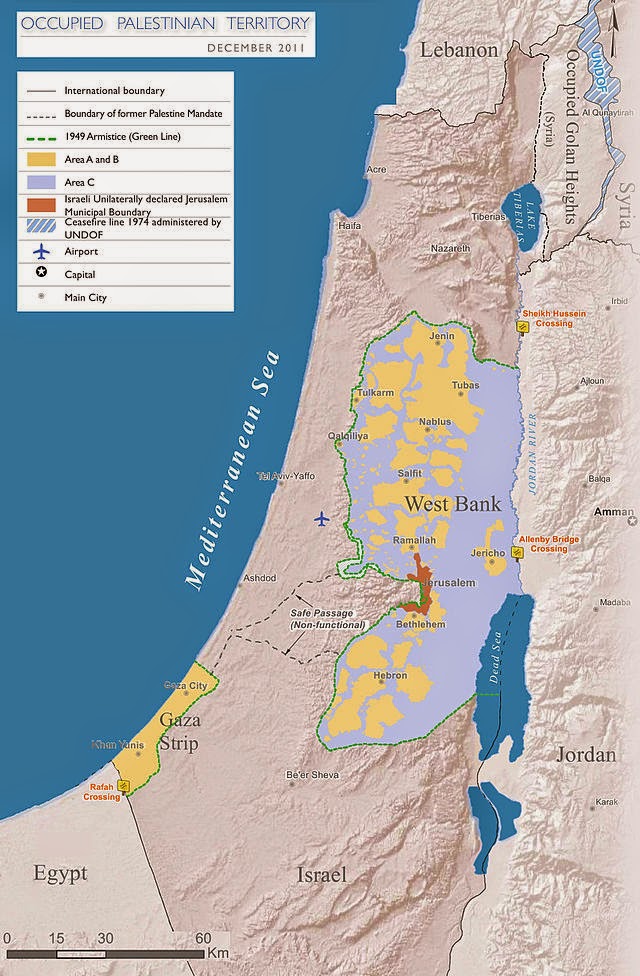
Palestine
The United States is “running interference for Israel,” Khalidi said. “Whenever anybody tries to do anything—British Parliament, the Spanish Parliament, the Irish Parliament, the Swedish government—the United States objects. 

“Whenever anybody tries to do anything diplomatically or in a nonviolent manner, such as boycott, divestment and sanctions,” they (these actions and those who carry them out) are labeled “anti-Semitic.” In the meantime, “the Palestinians are supposed to lie down and let the bulldozers and the settlement enterprise and the repression run over them and return to negotiations, which Netanyahu has already told us can never lead to an end to occupation.”

Gaza Strip
The current state of affairs is, “to a very large extent” the “doing of the United States” – rhetoric of the US president notwithstanding. “As long as American money is used to support the repression of Palestinians,” as long as the US Department of Justice Department and US Treasury permit “US 501(c)(3), supposedly ‘charitable,’ organizations to funnel tens, hundreds of millions of dollars to settlement activities, to the repression of Palestinians,” presidential rhetoric, the president’s public words are “meaningless.”

East Jerusalem
We are complicit in repression. “This is an American-Israeli enterprise,” he says. “The money is largely from the U
nited States” and “the weapons are from the United States.”

U
sing the authorities, police and military, the former Israeli soldier says, “the goal is to make people’s life miserable.” Eran Efrati said soldiers were told they were preventing “terror attacks” so they needed “to make their (Palestinians') life miserable so they will be afraid all the time and they will not have time to plan terror attacks."

In reality, Efrati said, "The end goal” is “to make them want to leave,” also to make them “want to do crazy things like attacks on Jews and on Israelis.”


Middle East
Rashid Khalidi reflected on the fact that "you do not control a region by oppressing the people and turning them into your enemies, what Israel has been doing for 47 years.” And the international mood is changing. 

Change in the air

"Among younger people,” people on campuses, people who do not consume mainstream media, Khalidi observes, “there is an awakening…, an enormous change in public opinion below the level of the mainstream media. 

"In Europe, there is an enormous shift: four major European countries have had parliaments or governments actually take a stand.” While that has not yet been translated into “effective pressure to stop the acts of oppression,” he says, “…we are getting there.

“Everybody in Europe knows what’s going on. What the American media does not tell the Americans, the European media does tell Europeans”; so “at least from Europe and the rest of the world, you’re going to see increasing pressure on Israel. The problem is here,” Rashid Khalidi concludes,…in this country,” the United States of America.


Sources and notes

DEMOCRACY NOW! today

“‘Palestinians Always Live in Fear’: Jerusalem Killings Follow Months of Tensions, Settlement Growth,”  November 19, 2014,
http://www.democracynow.org/2014/11/19/palestinians_always_live_in_fear_jerusalem

RASHID KHALIDI

Author and academic Rashid Ismail Khalidi’s most recent books include Resurrecting Empire: Western Footprints and America’s Perilous Path in the Middle East (2004); The Iron Cage: The Story of the Palestinian Struggle for Statehood (2006); Sowing Crisis: The Cold War and American Dominance in the Middle East (2009): Brokers of Deceit: How the U.S. Has Undermined Peace in the Middle East (2013). Khalidi’s research focuses on the history of the modern Middle East, on countries of the southern and eastern Mediterranean, the emergence of various national identities and the role played by external powers in their development. His work also covers the effect of the press in forming sense of community; the role of education in construction of political identity; developing narratives in the region in the past centuries. This Palestinian-Lebanese American and Middle East historian served in 1994 as President of the Middle East Studies Association of North America; in later years editor of the Journal of Palestine Studies. http://en.wikipedia.org/wiki/Rashi

ERAN EFRATI

Former member of the Israeli Defense Forces (combat soldier to “anti-occupation activist”), Eran Efrati is an investigative researcher into the Israeli military; and formerly chief researcher of “Breaking the Silence,” an organization of veteran Israeli soldiers working to raise awareness about the reality in the Occupied Territories. Efrati has “collected testimonies from IDF (Israeli Defense Forces) soldiers, guided political tours to the West Bank, lectured before Israeli and international audiences. The collected testimonies appear in the booklet ‘Operation Cast Lead’ and their most recent release ‘Our Harsh Logic.’”  His current research focuses on “international military and police partnerships, and the global arms trade.” http://www.russelltribunalonpalestine.com/en/eran-efrati


______________________________________

A lifelong American writer and writer/activist (former academic and staffer with the U.S. government in Washington), Dr. Carolyn LaDelle Bennett is credentialed in education and print journalism and public affairs (PhD, Michigan State University, East Lansing, Michigan; MA, The American University, Washington, DC). Her work concerns itself with news and current affairs, historical contexts, and ideas particularly related to acts and consequences of U.S. foreign relations, geopolitics, human rights, war and peace, and violence and nonviolence. Dr. Bennett is an internationalist and nonpartisan progressive personally concerned with society and the common good. An educator at heart, her career began with the U.S. Peace Corps, teaching in Sierra Leone, West Africa. Since then, she has authored several books and numerous current-affairs articles; her latest book: UNCONSCIONABLE: How The World Sees Us: World News, Alternative Views, Commentary on U.S. Foreign Relations; most thoughts, articles, edited work are posted at Bennett’s Study: http://todaysinsightnews.blogspot.com/ and on her Facebook page https://www.facebook.com/carolynladelle.bennett. http://www.prweb.com/releases/2014/08UNCONSCIONABLE/prweb12131656.htm http://bookstore.xlibris.com/Products/SKU-000757788/UNCONSCIONABLE.aspx Her books are also available at independent bookstores in New York State: Lift Bridge in Brockport; Sundance in Geneseo; Dog Ears Bookstore and Literary Arts Center in Buffalo; Burlingham Books in Perry; The Bookworm in East Aurora

_____________________________________

Friday, November 30, 2012

UN majority agrees Palestinians must live in freedom, dignity on their own land with sovereignty, self-determination rights


Dr. Hanan Ashrawi 
Urgency of the moment demands full engagement in “ending the cruel and illegal occupation”
Editing by Carolyn Bennett

The question the international community should ask, Hanan Ashrawi wrote this week at the Guardian, “is not who wants negotiations, but who wants solutions.

The answer is clear – one side wants to negotiate a permanent solution,  the other side wants permanent negotiations.

Who is Hanan Ashrawi?

Dr. Hanan Ashrawi is a Palestinian politician and peace negotiator “known for straight-talking diplomacy.” She is one of the most prominent speakers for the Palestinian people.

Born in 1946 in Ramallah (a town in the West Bank, administered as part of the British Mandate of Palestine from 1920 to 1948) into a family that included parents, Daoud Mikhail, a founding member of the Palestine Liberation Organization; a devout Christian mother of Lebanese descent; and relatives of Catholic, Greek Orthodox, Baptist and Muslim affiliation, Hanan Ashrawi is among few who have as visibly represented the Palestinian people.

Palestinian legislator, activist, and scholar Hanan Daoud Khalil Ashrawi was an important leader during the First Intifada. She has served as the official representative for the Palestinian Delegation to the Middle East peace process, since 1996 elected repeatedly to the Palestinian Legislative Council, and until 1998 minister of higher education for the Palestinian Authority. Dr. Ashrawi is a member of Palestinian Prime Minister Salam Fayyad’s Third Way Party and the first woman elected to the Palestinian National Council.

She serves on the Advisory Board of several international and local organizations including the World Bank Middle East and North Africa (MENA), United Nations Research Institute for Social Development (UNRISD) and the International Human Rights Council.

Dr. Ashrawi took academic credentials in Medieval and Comparative Literature (doctorate at the University of Virginia-United States) and in English (undergraduate and graduate degrees at the American University of Beirut, Lebanon). 

A
shrawi continued her Guardian article the day before the General Assembly voted overwhelmingly for upgrading Palestinian status in the United Nations.

“We are farther today from having a serious peace partner than at any time since we began this [peace] ‘process,’” she said. 
[Israeli Prime Minister Binyamin Netanyahu, at best, views negotiations in the context of photo opportunities and handshakes to improve his international image and keep public opinion quiet. At worst, he exploits the ‘process’ to continue settlement expansion, the annexation of Jerusalem, and the ‘enjoyment’ of an American-led legal cover to enable him to act with impunity. 
“This, in fact, represents a severe provocation to our people who have been on the receiving end of such an enormous injustice without responding violently or illegally. While we have met our commitments, Israel continues to renege on its obligations and to build on the 22 percent of the remaining Palestinian land designated for the free sovereign state of Palestine.

“… Rather than being perceived as a substitute for negotiations, our efforts are consistent with the international community’s objective of achieving a peaceful solution whereby Palestine and Israel can live side by side in peace and security.

“… [Countries choosing] not to vote with Palestine will find themselves on the wrong side of history ─ let alone morality, justice and international law.

“Israel is deliberately destroying the two-state solution, as well as the chances for peace and security in the region and beyond.

“It is high time that [wavering] countries recognize the urgency of the moment and become fully engaged in ─

ending the cruel and illegal occupation and 

enabling the Palestinians to exercise their right to self-determination and sovereignty and to live in freedom and dignity on their own land. 

Palestinian President Mahmoud Abbas said yesterday to the 193-member UN General Assembly

The moment has arrived for the world to say clearly: enough of aggression, settlements and occupation.

Issue a birth certificate of the reality of the State of Palestine.

The window of opportunity is narrowing and time is quickly running out.


T


he United Nations General Assembly then voted overwhelmingly to accord Palestine ‘Non-Member Observer State’ status.

Vote on Status of Palestine at United Nations: The draft resolution on the Status of Palestine at the United Nations (document A/67/L.28) was adopted by a recorded vote of 138 in favor to 9 against, with 41 abstentions, as follows:

YES votes
Afghanistan, Algeria, Angola, Antigua and Barbuda, Argentina, Armenia, Austria, Azerbaijan, Bahrain, Bangladesh, Belarus, Belgium, Belize, Benin, Bhutan, Bolivia, Botswana, Brazil, Brunei Darussalam, Burkina Faso, Burundi, Cambodia, Cape Verde, Central African Republic, Chad, Chile, China, Comoros, Congo, Costa Rica, Côte d’Ivoire, Cuba, Cyprus, Democratic People’s Republic of Korea, Denmark, Djibouti, Dominica, Dominican Republic, Ecuador, Egypt, El Salvador, Eritrea, Ethiopia, Finland, France, Gabon, Gambia, Georgia, Ghana, Greece, Grenada, Guinea, Guinea-Bissau, Guyana, Honduras, Iceland, India, Indonesia, Iran, Iraq, Ireland, Italy, Jamaica, Japan, Jordan, Kazakhstan, Kenya, Kuwait, Kyrgyzstan, Lao People’s Democratic Republic, Lebanon, Lesotho, Libya, Liechtenstein, Luxembourg, Malaysia, Maldives, Mali, Malta, Mauritania, Mauritius, Mexico, Morocco, Mozambique, Myanmar, Namibia, Nepal, New Zealand, Nicaragua, Niger, Nigeria, Norway, Oman, Pakistan, Peru, Philippines, Portugal, Qatar, Russian Federation, Saint Kitts and Nevis, Saint Lucia, Saint Vincent and the Grenadines, Sao Tome and Principe, Saudi Arabia, Senegal, Serbia, Seychelles, Sierra Leone, Solomon Islands, Somalia, South Africa, South Sudan, Spain, Sri Lanka, Sudan, Suriname, Swaziland, Sweden, Switzerland, Syria, Tajikistan, Thailand, Timor-Leste, Trinidad and Tobago, Tunisia, Turkey, Turkmenistan, Tuvalu, Uganda, United Arab Emirates, United Republic of Tanzania, Uruguay, Uzbekistan, Venezuela, Viet Nam, Yemen, Zambia, Zimbabwe.

NO votes
Canada, Czech Republic, Israel, Marshall Islands, Micronesia (Federated States of), Nauru, Palau, Panama, United States

ABSTENTIONS (tantamount to no)
Albania, Andorra, Australia, Bahamas, Barbados, Bosnia and Herzegovina, Bulgaria, Cameroon, Colombia, Croatia, Democratic Republic of the Congo, Estonia, Fiji, Germany, Guatemala, Haiti, Hungary, Latvia, Lithuania, Malawi, Monaco, Mongolia, Montenegro, Netherlands, Papua New Guinea, Paraguay, Poland, Republic of Korea, Republic of Moldova, Romania, Rwanda, Samoa, San Marino, Singapore, Slovakia, Slovenia, The former Yugoslav Republic of Macedonia, Togo, Tonga, United Kingdom, Vanuatu.

ABSENTEES (carelessly tantamount to no)
Equatorial Guinea, Kiribati, Liberia, Madagascar, Ukraine.


Sources and notes

This episode of One on One can be seen from Saturday, September 26, at the following times GMT: Saturday: 0130, 1630; Sunday: 0430; Monday: 0300, 1230.

http://www.aljazeera.com/programmes/oneonone/2009/09/200992282911940941.html

Peace prize for Ashrawi─ Palestinian MP and human rights activist Hanan Ashrawi has won the prestigious Sydney Peace Prize. Last Modified: 08 Aug 2003 17:49 GMT
http://www.worldtrek.org/odyssey/mideast/ashrawi/ashrawibio.html

Wikipedia notes, http://en.wikipedia.org/wiki/Hanan_Ashrawi

Ramallah

Ramallah is a town in the West Bank, adjacent to the town of Al-Bīrah (east) and north of Jerusalem. Administered as part of the British mandate of Palestine (1920–48).

Ramallah was part of the West Bank territory taken by Arab forces in the first of the Arab-Israeli wars (1948–49) and subsequently annexed by Jordan. After the Six-Day War of 1967, Ramallah was under Israeli control as part of the occupied West Bank territory until coming under the administration of the Palestinian Authority (PA) in the wake of the 1993 Oslo Accords.

It later became the centre of PA administration in the West Bank. As an ancient settlement, Ramallah has buildings incorporating masonry from the time of Herod the Great (reigned 37–4 BCE), but no complete structure antedates the Crusades of the 11th century. Britannica note

First Intifada

In December 1987, Israeli soldiers in the Gaza Strip killed an Arab youth engaged in a protest. Widespread unrest broke out in the Israeli-occupied territories, leading to 21 deaths in two weeks.

This was the start of the intifada (‘shaking’), a wave of Palestinian protests and Israeli reprisals that lent new urgency to Middle East diplomacy.

Israeli military rule of the West Bank then hardened and the Fatah faction of the PLO from bases in Lebanon stepped up actions. Britannica note


General Assembly Votes Overwhelmingly to Accord Palestine ‘Non-Member Observer State’ Status in United Nations

Objective to ‘Breathe New Life’ into Peace Process, Says Palestinian President

Israel’s Delegate Counters, Without Direct Negotiations, Peace Remains ‘Out of Reach’

General Assembly GA/11317, November 29, 2012, Department of Public Information • News and Media Division • New York, Sixty-seventh General Assembly
General Assembly Plenary 44th & 45th Meetings (PM & Night), http://www.un.org/News/Press/docs/2012/ga11317.doc.htm


________________________________

Bennett's books are available in New York State independent bookstores: Lift Bridge Bookshop: www.liftbridgebooks.com [Brockport, NY]; Sundance Books: http://www.sundancebooks.com/main.html [Geneseo, NY]; Mood Makers Books: www.moodmakersbooks.com [City of Rochester, NY]; Dog Ears Bookstore and Literary Arts Center: www.enlightenthedog.org/ [Buffalo, NY]; Burlingham Books – ‘Your Local Chapter’: http://burlinghambooks.com/ [Perry, NY 14530]; The Bookworm: http://www.eabookworm.com/ [East Aurora, NY] • See also: World Pulse: Global Issues through the eyes of Women: http://www.worldpulse.com/ http://www.worldpulse.com/pulsewire http://www.facebook.com/#!/bennetts2ndstudy

________________________________

Tuesday, November 27, 2012

Human Rights Watch reprimands Syria, fails to cite UNSC/U.S. cluster bomb use


Stop killing, Stop Cluster Bomb production, use, stockpiling by all nations -- no exceptions
Editing, comment by Carolyn Bennett

Cluster Munition Coalition reports

AFFECTED COUNTRIES AND TERRITORIES

Affected by cluster munitions from use in armed conflict: 37 countries and territories [none are permanent members of the United Nations Security Council]

A
fghanistan, Albania, Angola, Azerbaijan, Bosnia-Herzegovina, Cambodia, Chad, Chechnya, Croatia, Democratic Republic of Congo, Eritrea, Ethiopia, Falklands/Malvinas, Georgia, Grenada, Iraq, Israel, Kosovo, Kuwait, Lao PDR, Lebanon, Mauritania, Montenegro, Mozambique, Nagorno-Karabakh, Saudi Arabia, Serbia, Sierra Leone, South Sudan, Sudan, Syria, Tajikistan, Thailand Uganda, Vietnam, Western Sahara, Zambia, Yemen


USERS OF CLUSTER MUNITIONS

Used cluster munitions: 19 countries

[In red permanent members of the United Nations Security Council]

C
 olombia, Eritrea, Ethiopia, France, Georgia, Iraq, Israel, Libya, Morocco, The Netherlands, Nigeria, Russia, Saudi Arabia, South Africa, Former Yugoslavia (Serbia), Sudan, Thailand, United Kingdom, United States
 

PRODUCERS OF CLUSTER MUNITIONS


Produced/still producing cluster munitions: 35 countries

[In red permanent members of the United Nations Security Council]

A
rgentina, Australia, Belgium, Bosnia-Herzegovina, Brazil, Chile, China, Croatia, Egypt, France, Germany, Greece, India, Iran, Iraq, Israel, Italy, Japan, Netherlands, North Korea, Pakistan, Poland, Romania, Russia, Serbia, Singapore, Slovakia, South Africa, South Korea, Spain, Sweden, Switzerland, Turkey, United Kingdom, United States
 

STOCKPILERS OF CLUSTER MUNITIONS

Stockpiles cluster munitions: 86 countries

[In red permanent members of the United Nations Security Council]

A
lgeria, Angola, Argentina, Austria, Azerbaijan, Bahrain, Belarus, Belgium, Bosnia & Herzegovina, Brazil, Bulgaria, Canada, Chile, China, Colombia, Croatia, Cuba, Czech Republic, Denmark, Ecuador, Egypt, Eritrea, Estonia, Ethiopia, Finland, France, Georgia, Germany, Greece, Guinea, Guinea Bissau, Honduras, Hungary, India, Indonesia, Iran, Iraq, Israel, Italy, Japan, Jordan, Kazakhstan, Kuwait, Libya, Moldova, Mongolia, Montenegro, Morocco, Netherlands, Nigeria, North Korea, Norway, Oman, Pakistan, Peru, Poland, Portugal, Qatar, Romania, Russia, Saudi Arabia, Serbia, Singapore, Slovakia, Slovenia, South Africa, South Korea, Spain, Sudan, Sweden, Switzerland, Syria, Thailand, Turkey, Turkmenistan, Uganda, Ukraine, United Arab Emirates, United Kingdom, United States, Uzbekistan, Yemen, Zimbabwe


H
uman Rights Watch reports today

“(Washington, DC) – Compelling evidence has emerged that an airstrike using cluster bombs on the town of Deir al-`Assafeer near Damascus killed at least 11 children and wounded others on November 25, 2012. The Syrian government should immediately cease its use of this highly dangerous weapon, which has been banned by most nations.”

“At least 16 governments have condemned Syria’s use of cluster munitions, including Austria, Belgium, Denmark, France, Germany, Ireland, Japan, Mexico, Netherlands, New Zealand, Norway, Portugal, Qatar, Switzerland, the United Kingdom, and the United States.

 
I
my view, it is dishonest and cowardly for either permanent members of the UN Security Council, who have failed to sign or become member states to the Convention on Cluster Munitions, or Human Rights Watch to cite or reprimand Syria for alleged bombing and as a non member to the CCM and fail to cite and reprimand in context the United States' leading model in using, making, stockpiling the munitions and failing to become signatory or member to the Convention.

This is why nonprofits, “rights” organizations, and the “international community” increasingly show themselves as and are judged lacking in credibility.   


Convention on Cluster Munitions (CCM) reports
C
onvention Status 
The Convention was adopted in Dublin by 107 states on May 30, 2008, and signed in Oslo on December 3 the same year. 
The Convention became binding international law when it entered into force on August 1, 2010.  

 By October 8, 2012, a total of 111 states have joined the Convention, as 77 States Parties and 34 Signatories.

77 States Parties (by region)
34 Signatories (by region)
Africa (22)
Africa (20)
Botswana, Burkina Faso, Burundi, Cameroon, Cape Verde, Comoros, Côte d’Ivoire, Ghana, Guinea-Bissau, Lesotho, Malawi, Mali, Mauritania, Mozambique, Niger, Senegal, Seychelles, Sierra Leone, Swaziland, Togo, Tunisia, Zambia
Angola, Benin, Central African Republic, Chad, Congo, Democratic Republic of Congo, Djibouti, Gambia, Guinea, Kenya, Liberia, Madagascar, Namibia, Nigeria, Rwanda, Sao Tome and Principe, Somalia, South Africa, Uganda and United Republic of Tanzania
Americas (16)
Americas (6)
Antigua and Barbuda, Chile, Costa Rica, Dominican Republic, Ecuador, El Salvador, Grenada, Guatemala, Honduras, Mexico, Nicaragua, Panama, Peru, Saint Vincent and the Grenadines, Trinidad and Tobago, Uruguay
Bolivia, Canada, Colombia, Haiti, Jamaica, Paraguay
Asia (3)
Asia (2)
Afghanistan, Japan, Lao PDR
Indonesia, Philippines
Europe (30)
Europe (3)
Albania, Austria, Belgium, Bosnia and Herzegovina, Bulgaria, Croatia, Czech Republic, Denmark, France, Germany, Holy See, Hungary, Ireland, Italy, Lithuania, Luxembourg, the FYR of Macedonia, Malta, Moldova, Monaco, Montenegro, Netherlands, Norway, Portugal, San Marino, Slovenia, Spain, Sweden, Switzerland, United Kingdom
Cyprus, Iceland, Liechtenstein
Middle East (1)
Middle East (1)
Lebanon
Iraq
Pacific (5)
Pacific (2)
Australia, Cook Islands, Fiji, New Zealand, Samoa
Nauru, Palau


States adopting the Convention on Cluster Munitions in 2008

107 states adopted the Convention in Dublin on May 30, 2008:

AFRICA: Angola, Benin, Botswana, Burkina Faso, Burundi, Cameroon, Chad, Comoros, Republic of Congo, Côte d’Ivoire, Democratic Republic of Congo, Ghana, Guinea, Guinea-Bissau, Kenya, Lesotho, Madagascar, Malawi, Mali, Mauritania, Morocco, Mozambique, Niger, Nigeria, Sao Tome and Principe, Senegal, Seychelles, Sierra Leone, South Africa, Sudan, Swaziland, Tanzania, Togo, Uganda and Zambia

AMERICAS: Argentina, Belize, Bolivia, Canada, Chile, Costa Rica, Dominican Republic, Ecuador, El Salvador, Guatemala, Honduras, Jamaica, Mexico, Nicaragua, Panama, Paraguay, Peru, Uruguay and Venezuela

ASIA: Brunei Darussalam, Cambodia, Indonesia, Japan, Kyrgyzstan, Lao PDR, Malaysia, Philippines and Timor-Leste

EUROPE: Albania, Austria, Belgium, Bosnia and Herzegovina, Bulgaria, Croatia, Czech Republic, Denmark, Estonia, Finland, France, Germany, Holy See, Hungary, Iceland, Ireland, Italy, Lithuania, Luxembourg, Macedonia (FYR), Malta, Moldova, Montenegro, The Netherlands, Norway, Portugal, San Marino, Serbia, Slovakia, Slovenia, Spain, Sweden, Switzerland and United Kingdom

MIDDLE EAST: Bahrain, Lebanon and Qatar

PACIFIC: Australia, Cook Islands, Fiji, New Zealand, Palau, Papua New Guinea, Samoa and Vanuatu


Sources and notes

Cluster Munition Coalition
http://www.stopclustermunitions.org/the-problem/countries/
Cluster bomb image caption: A screenshot from an unverified video posted by opposition activists purportedly showing cluster bombs in Deir al-Asafir

Human Rights Watch today
“Syria: Evidence Shows Cluster Bombs Killed Children ─ All Governments Should Press Damascus to Stop Using Cluster Munitions,”  November 27, 2012, http://www.hrw.org/news/2012/11/27/syria-evidence-shows-cluster-bombs-killed-children-0

http://www.clusterconvention.org/ratifications-and-signatures/

THE OSLO PROCESS

In February 2007, 46 governments met in Oslo to endorse a call by Norwegian Foreign Minister Jonas Gahr Støre to conclude a new legally binding instrument in 2008.

The Convention prohibits the use, production, transfer and stockpiling of cluster munitions, and requires states to destroy existing stockpiles of the weapons, clear contaminated areas and assist survivors and affected communities.

Subsequent international Oslo Process meetings were held in Peru (May 2007), Austria (December 2007), and New Zealand (February 2008).

Some 107 countries negotiated and adopted the Convention on Cluster Munitions in May 2008 in Dublin, Ireland.

The convention was signed by 94 countries at the Signing Conference in Oslo in December 2008 and entered into force as binding international law on 1 August 2010, after it reached the threshold of 30 ratifications in February 2010, just 15 months after it opened for signature.

All countries can still accede to the convention at the United Nations headquarters in New York.

http://www.stopclustermunitions.org/the-problem/


___________________________________

Bennett's books are available in New York State independent bookstores: Lift Bridge Bookshop: www.liftbridgebooks.com [Brockport, NY]; Sundance Books: http://www.sundancebooks.com/main.html [Geneseo, NY]; Mood Makers Books: www.moodmakersbooks.com [City of Rochester, NY]; Dog Ears Bookstore and Literary Arts Center: www.enlightenthedog.org/ [Buffalo, NY]; Burlingham Books – ‘Your Local Chapter’: http://burlinghambooks.com/ [Perry, NY 14530]; The Bookworm: http://www.eabookworm.com/ [East Aurora, NY] • See also: World Pulse: Global Issues through the eyes of Women: http://www.worldpulse.com/ http://www.worldpulse.com/pulsewire http://www.facebook.com/#!/bennetts2ndstudy

___________________________________

Friday, November 23, 2012

War-on-terror impunity reflected in Alexandrowicz’s “The Law in these Parts”

Israeli warplane

Ironfisted breach of law abrogates justice under law: Israel’s conquest of Palestine is U.S. Global War on Terror
Edited by Carolyn Bennett

Geneva Conventions
Told in five chapters roughly corresponding to a few foundational legal opinions, “The Law in these Parts” is a documentary by Israeli director Ra’anan Alexandrowicz dealing with 45 years of the Israeli military legal system in the Occupied Territories on the West Bank and in the Gaza Strip. This is an edited excerpt from a review by Kevin Kearney which was published by the International Committee of the Fourth International at the World Socialist Web Site.
Israeli wall

T
errorists and Criminals (Chapter 2 of “The Law in these Parts”)


Before introducing the 1969 case of the Israel Defense Forces (IDF) v Omar Mohammad Al-Qassem and eight others in Ramallah (all Fatah members), Alexandrowicz explains ─

Today the distinction between soldier and terrorist is deeply rooted in our legal and political discourse.

But at the end of the 1960s it was necessary to cement this distinction in the law. 

Defendant Qassem tells the court he is certain this is his land but he left when the occupation began and returned with other fighters to liberate Palestine.

“Although the evidence showed that Qassem had only engaged soldiers in battle—and he asserts he was merely a soldier fighting soldiers—the court found that Qassem and his organization were terrorists with no legal protections under the international laws of war ─ specifically the Geneva Convention.”
International Criminal Court
The Hague

When inordinate power – to make and break, interpret, execute and enforce law − vests in those who routinely, cavalierly breach law  

“In his ruling Judge Abulafia concedes the Geneva Convention grants special status to lawful combatants and that even includes members of liberation organizations, but [the judge] holds that this status must first be earned by following the rules of war in battle.

“Abulafia finds that the entire Palestinian liberation movement does not follow the rules of war, citing civilian victims unrelated to the particular facts of Qassem’s case and declares [Qassem] the member of a terrorist organization, specifying that Palestinian liberation fighters like Qassem will never have any rights under international law.”

G
United States attacks Iraq
lobal war on terror TERROR

“Here we encounter, Kevin Kearney writes, “the Global War on Terror’s pretense of legality in microcosm, growing organically out of the Israeli conquest of Palestine.

“This poisonous piece of legal fruit,” Kearney continues, “has been dusted off, revised and updated by the U.S. government, which arrogates to itself

the authority to strip all rights of anyone it brands a terrorist
U.S. drone
War on Terror terror 
to subject them to indefinite detention and
even summary execution without trial

Kearney concludes in praise of the filmmaker. “The Law in These Parts” is a great success primarily because Alexandrowicz is a principled artist who is “earnest in his desire to make sense of his subject matter… seeking to understand a tragic reality and to prevent its recreation on a global scale.”


Sources and notes

Israeli warplane
“The Law in These Parts: Israeli military justice in the Occupied Territories” (Kevin Kearney, published by the International Committee of the Fourth International (ICFI), wsws.org, November 21, 2012, http://www.wsws.org/articles/2012/nov2012/lawi-n21.shtml

From Israeli director Ra’anan Alexandrowicz, “The Law in These Parts,” has opened in New York City.

The Law in These Parts a film by Ra'anan Alexandrowicz
Film Forum Screenings New York City
209 West Houston Street, New York, NY 10014, between 6th Avenue and Varick (7th Avenue) to the venue's website

November 23, 2012, at 13:15, 15:15, 18:00, 20:00, 22:00
November 24, 2012, at 13:15, 15:15, 18:00, 20:00, 22:00
November 25, 2012, at 13:15, 15:15, 18:00, 20:00, 22:00
November 26, 2012, at 13:15, 15:15, 18:00, 20:00, 22:00
November 27, 2012, at 13:15, 15:15, 18:00, 20:00, 22:00
http://www.thelawfilm.com/eng#!/screenings
http://www.thelawfilm.com/eng#!/the-film


Britannica notes

FATAH

Fatah is a political and military organization of Arab Palestinians, founded in the late 1950s by Yāsir ʿArafāt and Khalīl al-Wazīr (Abū Jihād) with the aim of wresting Palestine from Israeli control by waging low-intensity guerrilla warfare.

Fatah (also spelled Fatḥ (Arabic: “Conquest” or “Opening”), inverted acronym of Ḥarakat al-Taḥrīr al-Waṭanī al-Filasṭīnī (“Palestine National Liberation Movement”)

Fatah timeline

1960s

Fatah obtains Syrian support and establishes base in Damascus.

Fatah develops commando-type organizational structure.
Carries out its first military operation (1964), blowing up an Israeli water-pump installation.

Headquartered in Jordan (1968), emerges as major Palestinian force and becomes (in March) primary target of Israeli attack on the Jordanian village of Karameh (150 guerrillas, 29 Israelis die) [Six-Day War had occurred in 1967]

Fatah becomes the largest, best-funded of all Palestinian organizations; takes over effective control of the Palestine Liberation Organization (PLO).

1970s

Jordan’s army, after that country’s civil war (September 1970), forces the PLO and Fatah fighters out of Jordan and into Lebanon

Jordanian authorities (July 1971) kill a respected Fatah leader, Abū ʿAlī ʿIyād.

Militant corps of Fatah, Black September (Aylūl Aswad), emerges (proclaimed in November 1971, notorious in September 1972).

1980s

Fatah is headquartered in southern Lebanon when Israel invades (1982) presenting further crisis.

Tunisia becomes Fatah’s next base of operations.

Rival battling factions develop within Fatah (1983), divisive leadership struggle develops.

1990s

Arafāt reclaims his leadership of Fatah, the largest constituent member of the PLO

Israel and Fatah-led PLO (1993) sign peace agreement (the Oslo Accords) opposed by Rival Islamic group, Hamas.

Palestinian Authority (PA) forms (1994) to govern emerging Palestinian autonomous regions; Gaza city becomes Fatah headquarters.

Elections are held in PA-administered areas (1996)
Arafat wins the presidency
Fatah captures a majority of seats within the Palestinian Legislative Council (PLC); Hamas does not participate in the elections.

2000s

One of Fatah’s original members, Mahmoud Abbas, is elected PA president (2005). Yasir Arafat had died November 11, 2004 [the cause of his death was being questioned in 2012]

Elections are held (2006) for the PLC; Hamas wins majority of seats.


YASIR ARAFAT

Yasir Arafat: president (1996–2004) of the Palestinian Authority (PA), chairman (1969–2004) of the Palestine Liberation Organization (PLO), and leader of Fatah, the largest of the constituent PLO groups.

Arafat led the PLO to a peace agreement with the Israeli government in 1993; and in 1994 received jointly with Israel’s Yitzhak Rabin and Shimon Peres the Nobel Prize for Peace.


___________________________________________

Bennett's books are available in New York State independent bookstores: Lift Bridge Bookshop: www.liftbridgebooks.com [Brockport, NY]; Sundance Books: http://www.sundancebooks.com/main.html [Geneseo, NY]; Mood Makers Books: www.moodmakersbooks.com [City of Rochester, NY]; Dog Ears Bookstore and Literary Arts Center: www.enlightenthedog.org/ [Buffalo, NY]; Burlingham Books – ‘Your Local Chapter’: http://burlinghambooks.com/ [Perry, NY 14530]; The Bookworm: http://www.eabookworm.com/ [East Aurora, NY] • See also: World Pulse: Global Issues through the eyes of Women: http://www.worldpulse.com/ http://www.worldpulse.com/pulsewire http://www.facebook.com/#!/bennetts2ndstudy

___________________________________________